
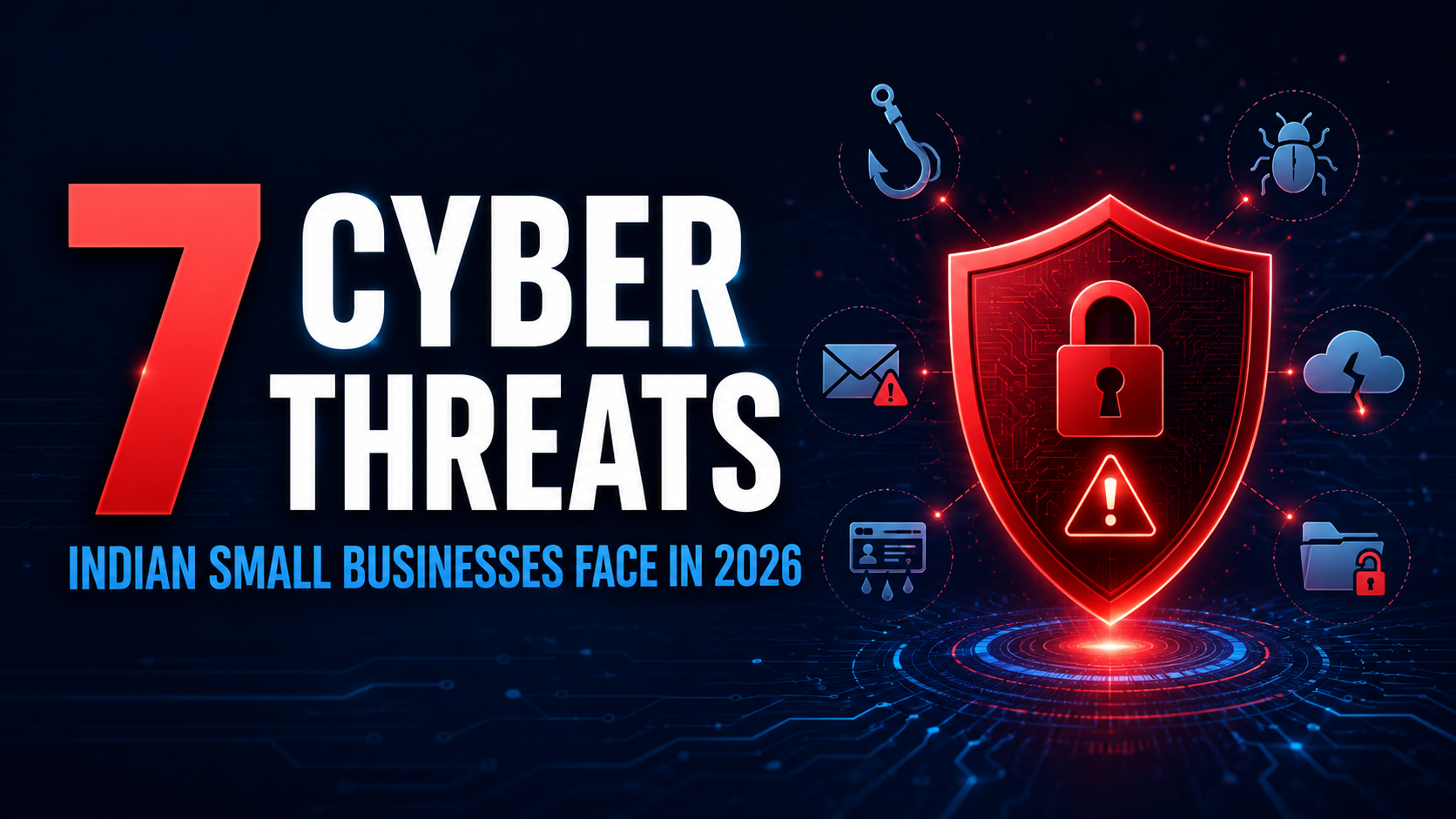
Website security for small business India is not a topic most owners think about — until something goes wrong. Your site gets blacklisted by Google. A customer calls saying their data was stolen. Or you wake up to a blank screen where your business used to be. These are not rare horror stories. They happen every week, to businesses exactly like yours. If you think your 5-page website is too small to attract hackers, this post will change your mind.
Can a Simple Small Business Website Really Get Hacked?
Yes. And the answer is not even close. Hackers don't sit at a keyboard manually picking targets. They run automated bots that scan hundreds of thousands of websites every single day, looking for known vulnerabilities. Your 5-page brochure site gets the same scan as a large e-commerce platform.
According to the Verizon Data Breach Investigations Report, 43% of all cyberattacks globally target small businesses. Yet a survey of Indian SMB owners found that 74% believe they're "too small to be targeted." That gap between belief and reality is exactly what attackers count on.
Indian small businesses are increasingly in the crosshairs because security is treated as an afterthought — or skipped entirely. The consequences are severe: Google blacklists your site (killing your search traffic overnight), customer data gets stolen, and the trust you spent years building disappears in hours. 60% of small businesses that suffer a major cyberattack shut down within 6 months. That's not a statistic to scroll past.
7 Cyber Threats Indian Small Businesses Face in 2026
These are not theoretical risks. Each one has hit real businesses across India — from small shops in Kolkata to coaching centres in Delhi.
1. Phishing Attacks
A fake email arrives that looks exactly like it's from your hosting company, your bank, or Google. One click, and your login credentials are gone. According to the Data Security Council of India (DSCI), phishing attacks increased 61% in India in 2024. Your staff is the target, not just your code — and 95% of cybersecurity breaches are caused by human error.
2. Malware and Ransomware
Malicious code gets injected into your website files. Sometimes it silently steals visitor data. Sometimes it locks your entire site and demands payment to restore it. Small business owners often pay because they have no backup and no technical help on standby.
3. SQL Injection
If your contact form or search box passes data directly to your database without proper validation, a hacker can type a specially crafted string and pull out your entire customer database. Names, phone numbers, email addresses — all gone. This is one of the oldest attacks in the book, and it still works on poorly built websites in 2026.
4. Brute Force Attacks
Bots try thousands of password combinations per minute against your admin login. If your password is "admin123" or your business name, it will be cracked. No drama, no warning — just a silent takeover.
5. Outdated CMS and Plugins
WordPress powers 43% of the web — and accounts for over 90% of hacked CMS websites. Every plugin you install is a potential entry point. Abandoned plugins (ones the developer stopped updating) are essentially open doors with a welcome mat. In 2026, this remains the single easiest way to compromise a website at scale.
6. Fake SSL and Insecure Hosting
Cheap hosting often means shared servers with poor isolation, expired SSL certificates, and zero monitoring. Chrome flags sites without valid SSL as "Not Secure" — and 85% of users immediately leave such sites. Your visitors are exposed to data theft before they even fill out a form.
7. DDoS Attacks
A Distributed Denial of Service attack floods your server with fake traffic until it crashes completely. Your site goes offline. During a Durga Puja sale or a product launch, even 2 hours of downtime can mean serious revenue loss — and a frustrated customer base that doesn't come back.
Custom PHP vs WordPress: Which Is Safer for Your Business?
This is where we'll give you a straight answer instead of a balanced "both have pros and cons" non-answer: custom PHP is significantly safer for most small business websites.
WordPress runs on a public, well-known codebase. Hackers know exactly which files exist, where the login page is, and which plugin vulnerabilities to exploit. They write automated scripts targeting these known weaknesses and run them against millions of sites simultaneously.
A custom PHP website has no public blueprint. There's no shared codebase for attackers to study. There's no plugin ecosystem where one abandoned extension opens a door to thousands of installs at once. The attack scripts that work on WordPress simply don't apply.
Custom code is written specifically for your site. There's no shared vulnerability across thousands of other installs. If a hacker wants in, they have to work for it — and most bots aren't built for that.
At Infinite Option, we build 90% of our websites in custom PHP for exactly this reason. Security isn't a plugin we install — it's baked into how the site is written. You can see examples of this approach in our portfolio, from small catalog sites to complex booking platforms.
If you're currently on WordPress and worried about your exposure, our post on how much a website costs in India in 2026 covers what a rebuild or migration actually involves.
What Does a Secure Website Actually Look Like?
Here's a practical checklist. If your current site fails more than two of these, it needs attention:
The average time to detect a breach in India is 207 days, according to the IBM Cost of Data Breach Report. That means your site could be compromised for over six months before you even know. Regular monitoring cuts that window dramatically.
How Much Does Website Security Cost for Indian Small Businesses?
Less than you think to do it right. Far more than you expect when you have to fix it after the fact.
Basic security — SSL certificate plus secure hosting — is included free in all our web development projects priced at ₹12,000 and above. That covers the fundamentals most small business sites are missing right now.
Fixing a hacked website is a different story. Recovery costs for Indian SMBs typically run ₹10,000 to ₹50,000 — and that's before you account for lost sales during downtime, Google blacklisting recovery (which can take weeks), and the customers who simply don't come back. Secure hosting starts at ₹2,000 per year. The math isn't complicated.
Custom PHP development also removes the recurring cost that WordPress demands — constant plugin updates, premium security plugins, and the developer time to manage it all. One properly built site saves years of that overhead.
Website Security for Small Business India: The Foundation, Not a Feature
Every business website — a Howrah restaurant, a Kolkata coaching centre, a small clothing brand — is a target in 2026. The bots don't care about your revenue or your team size. They care about whether your site has a known vulnerability they can exploit in 0.3 seconds.
The right technology choice removes the biggest attack surface. Free SSL, secure hosting, and clean code are non-negotiables. Only 28% of Indian SMBs have any formal cybersecurity policy — don't be in the 72% that's waiting for something to go wrong.
If you're unsure whether your current website is safe, get it reviewed before a hacker does it for you. The team at Infinite Option builds every website with security as a starting point — custom PHP, proper input validation, SSL included, and hosting on reliable servers. We're based in Howrah and have delivered 70+ projects across India and internationally. If your site needs a security check or a proper rebuild, reach out — we'll tell you honestly what it needs.